Updated

6 Best Safety Software for Multi-Site Oilfield Operations (2026)

Running safety compliance across 5, 15, or 30+ well sites means inconsistent audit standards, zero cross-site visibility, and software costs that multiply with every location. We evaluated six platforms built for distributed oilfield operations.

Jacob SzyszkaBy Jacob Szyszka, Founder, BasinCheck

Founder of BasinCheck. Researched and compared each tool based on published features, pricing, and verified user reviews.

Multi-site oilfield contractors face a safety management problem that single-site operations never encounter: keeping audit standards consistent across 5 to 30+ locations where crews rotate, conditions vary, and connectivity ranges from LTE to nonexistent. A safety director overseeing 12 well sites spread across the Permian Basin needs to know which locations were audited this week, where open corrective actions are piling up, and whether the crew that moved from Site 7 to Site 14 brought the same inspection rigor with them.

Most safety software was designed for single facilities or enterprise campuses with reliable internet. When mid-size oilfield contractors try to deploy these tools across dispersed field operations, three problems emerge immediately: per-user or per-site pricing models that make costs unpredictable as operations scale, no cross-site dashboards to compare safety performance across locations, and limited or no offline capability at remote well sites where cell coverage is spotty or absent.

We evaluated six safety platforms specifically for multi-site oilfield use. The criteria that mattered most: can you see all your sites on one dashboard, does the pricing model punish you for adding locations, does the tool work offline at remote well pads, and does it include oil-and-gas-specific templates (JSAs, H2S protocols, hot work permits) rather than forcing you to build everything from scratch?

#ProductBest ForPricing
1BasinCheckMid-size oilfield contractors with 5-30 active sites needing unified safety visibility without per-site or per-user cost scaling$149-$599/mo flat (unlimited sites and unlimited users on Pro)
2SafetyCulture (iAuditor)Multi-site operations that need standardized inspection templates deployed consistently across all locations$24/user/mo (Premium); Free plan available with limited features
3CorityLarge E&P companies and enterprise operators wanting comprehensive multi-site EHS with deep configurabilityQuote-based (enterprise); typically $50,000-$150,000+/year depending on modules and users
4VelocityEHSMid-to-large operations wanting modular EHS with cross-site performance comparison and benchmarking analyticsQuote-based; typically $20,000-$80,000+/year depending on modules and company size
5KPA EHSFleet-heavy oilfield operations that need DOT compliance, driver qualification management, and EHS in one platformQuote-based; pricing varies by module combination and company size
6IntelexEnterprise operators wanting full-suite EHSQ with global rollout capability across large multi-site portfoliosQuote-based (enterprise); typically $60,000-$200,000+/year for multi-site deployments
1

BasinCheck

Flat-priced safety platform built for multi-site oilfield contractors with cross-site dashboards and full offline capability

BasinCheck safety management software interface

Best For

Mid-size oilfield contractors with 5-30 active sites needing unified safety visibility without per-site or per-user cost scaling

Pricing

$149-$599/mo flat (unlimited sites and unlimited users on Pro)

BasinCheck was designed for exactly the scenario this article addresses: mid-size oilfield contractors running safety programs across multiple dispersed locations with rotating crews and unreliable connectivity. The platform treats every site equally — same templates, same audit standards, same reporting — without charging more as you add locations.

The cross-site dashboard is where multi-site operations get the most value. Safety directors can see which sites were audited this week, compare open corrective action counts by location, track incident rates across the operation, and identify which sites are falling behind. This is the visibility that multi-site contractors typically lack when using spreadsheets, paper forms, or single-site tools deployed independently at each location.

The flat pricing model deserves emphasis because it fundamentally changes the economics of multi-site safety software. A contractor operating 20 well sites with 60 field workers would pay $1,440/month on SafetyCulture ($24/user), require an enterprise quote from Cority or VelocityEHS, and pay $599/month on BasinCheck Pro regardless of user count or site count. When you add 5 more sites and 15 more workers next quarter, your BasinCheck cost stays the same.

Key Features

Cross-site safety dashboard with location-level audit completion, open issues, and incident trends
Flat monthly pricing — no per-user fees, no per-site fees, unlimited locations on every plan
Full offline mode: create audits, report incidents, complete JSAs with zero connectivity
Oil-and-gas-specific templates (JSAs, hot work permits, confined space, H2S protocols) pre-built
ECDSA-signed offline sync with conflict resolution for multi-device, multi-site operations
OSHA 300/300A log generation across all sites with automated incident classification

Pros

  • Flat pricing is the single biggest advantage for multi-site operations — a 20-site contractor with 80 field workers pays the same $599/mo as a 5-site operation with 15 workers; no cost surprises as you add locations or crew
  • Cross-site dashboard gives safety directors a single view of audit status, open corrective actions, and incident rates across all locations — the comparison view that most competitors charge enterprise pricing to unlock
  • Full offline capability means remote well sites without cell coverage get the same audit and incident reporting functionality as office-connected locations
  • O&G-specific templates are included, not custom-built at consulting rates — JSAs, hazard assessments, rig inspections, and OSHA forms are ready to deploy across all sites on day one

Cons

  • Newer to market than established enterprise players — smaller customer base and shorter track record
  • No environmental compliance modules — focused on safety audits, incidents, JSAs, and corrective actions; environmental reporting requires a separate tool
  • Limited integration ecosystem compared to enterprise platforms — API available but pre-built connectors to ERP and HRIS systems are still in development
  • Analytics depth is growing but does not yet match the statistical modeling capabilities of enterprise EHS platforms like Cority or VelocityEHS

Verdict: The most cost-effective safety platform for multi-site oilfield operations. Flat pricing, cross-site dashboards, full offline mode, and O&G-specific templates make it the natural fit for contractors managing 5-30+ dispersed locations.

2

SafetyCulture (iAuditor)

Widely adopted inspection platform with template standardization across multiple locations

SafetyCulture (iAuditor) safety management software interface

Best For

Multi-site operations that need standardized inspection templates deployed consistently across all locations

Pricing

$24/user/mo (Premium); Free plan available with limited features

SafetyCulture is the most widely deployed mobile inspection platform in the world, and its strength for multi-site operations is template standardization. A safety director can build a master well-site inspection template, configure scoring logic and corrective action triggers, and push that template to every site in the organization. When the template is updated — say, a new line item is added after a regulatory change — the update propagates to all locations automatically.

The analytics dashboard supports site-level filtering, which gives some cross-site visibility. You can compare inspection completion rates, average scores, and corrective action volumes across locations. However, the deeper comparison and trending features — the kind of cross-site analytics that multi-site oilfield operations need — are gated behind the Premium and Enterprise pricing tiers.

The per-user pricing model is the main friction point for multi-site oilfield contractors. SafetyCulture charges per seat, not per site or per organization. For a contractor running 15 well sites with 3 supervisors and 40 field workers, even putting only supervisors on the platform costs $1,080/month. If field workers need access for corrective action tracking or incident reporting, costs escalate further. This per-user model works well for small, fixed teams but creates budget unpredictability for operations where headcount fluctuates with the rig count.

Key Features

Template library with 100,000+ pre-built inspection checklists deployable across all sites
Centralized template management — update once, push to all locations
Analytics dashboard with site-level filtering and comparison views
Offline completion of pre-downloaded inspection templates
Photo capture with annotation and markup tools
Automated corrective action assignment from failed inspection items

Pros

  • Template standardization is genuinely strong — create a master inspection template and deploy it identically across 20+ sites, ensuring consistent audit standards regardless of which supervisor is conducting the inspection
  • Polished mobile experience with minimal training required — field crews can be productive within minutes, which matters when you have rotating workers across multiple sites
  • Large existing user base means extensive community templates, reliable support, and continuous platform improvements

Cons

  • Per-user pricing scales linearly with headcount — a 50-person multi-site operation pays $1,200+/month, and costs increase every time you hire a field worker or add a supervisor at a new site
  • Offline mode is limited to completing pre-downloaded templates — cannot create new inspections, report incidents, or complete JSAs offline at remote well sites
  • Cross-site comparison analytics require Premium or Enterprise tiers — the free and lower plans show individual site data but not the cross-location dashboards that multi-site operations need
  • Not oil-and-gas-specific — JSA workflows, H2S protocols, hot work permits, and OSHA 300 logs require custom template building or third-party integrations

Verdict: Strong template standardization and a polished mobile app, but per-user pricing and limited offline depth make it expensive and operationally constrained for multi-site oilfield operations with large rotating crews.

3

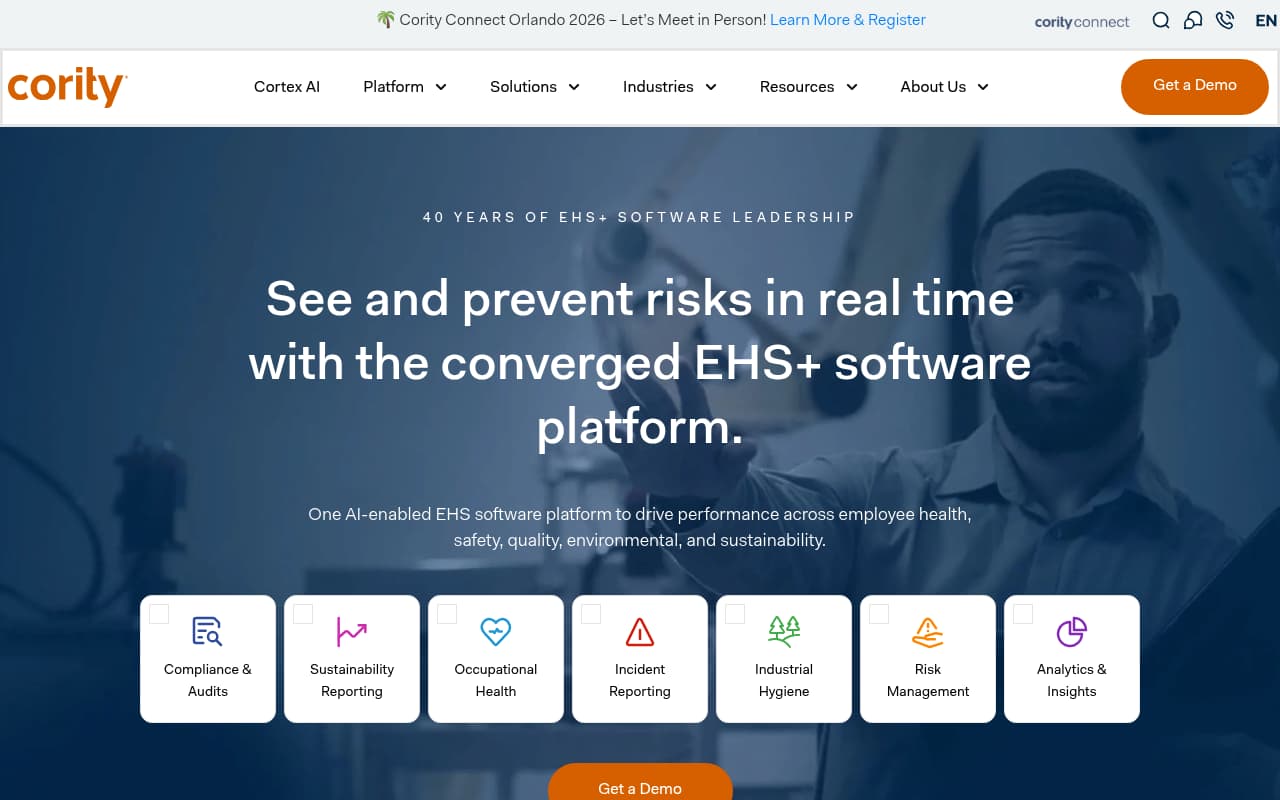
Cority

Enterprise EHS platform with multi-site hierarchy management and configurable compliance modules

Cority safety management software interface

Best For

Large E&P companies and enterprise operators wanting comprehensive multi-site EHS with deep configurability

Pricing

Quote-based (enterprise); typically $50,000-$150,000+/year depending on modules and users

Cority is a legitimate enterprise EHS platform that handles multi-site operations at scale. The organizational hierarchy feature lets you model complex corporate structures — a parent company with regional divisions, each containing multiple facilities, each with individual well sites or pipeline segments. Permissions, reporting, and data rollup all follow this hierarchy, which is essential for large operators managing 50+ locations across multiple states or countries.

The cross-site analytics are where Cority earns its enterprise pricing. Safety directors can benchmark TRIR and DART rates across locations, identify statistical outliers, track leading indicators by site, and run predictive models on incident likelihood. For organizations with enough data volume (typically 100+ locations), these analytics produce genuinely actionable insights about where to focus safety resources.

The challenge for mid-size oilfield contractors is that Cority is built for organizations with dedicated EHS departments, IT support for software administration, and budgets that can absorb $50,000-$150,000+ annually for safety software. A 100-person well service company operating 15 sites does not need environmental reporting, industrial hygiene modules, or ergonomics assessments — but Cority's pricing reflects the full enterprise platform even if you only use the safety audit and incident modules. The mobile experience is also secondary to the desktop platform, and offline functionality at remote well sites is limited.

Key Features

Multi-site organizational hierarchy with configurable location trees and reporting structures
Integrated EHS modules: incident management, audit management, compliance tracking, industrial hygiene, environmental reporting
Configurable dashboards with cross-site KPIs, trend analysis, and benchmarking
Regulatory content updates for OSHA, EPA, and state-level requirements
Advanced analytics with predictive modeling and leading indicator tracking
API integrations with SAP, Oracle, and major ERP systems

Pros

  • Purpose-built organizational hierarchy handles complex multi-site structures — parent companies, subsidiaries, regions, facilities, and individual well sites can all be modeled with appropriate permissions and rollup reporting
  • Deepest EHS module coverage on this list — incident management, audit management, compliance tracking, industrial hygiene, environmental, and ergonomics are all native modules, not bolt-on features
  • Advanced analytics with cross-site benchmarking let safety directors compare TRIR, DART rates, and audit scores across locations with statistical significance testing

Cons

  • Enterprise pricing puts Cority out of reach for most mid-size oilfield contractors — typical deployments start at $50,000+/year before implementation, and total first-year costs often exceed $100,000
  • Implementation timelines of 3-6 months are common, and the platform requires dedicated EHS software administrators to maintain configurations and user permissions
  • Mobile experience and offline capability lag behind field-first tools — Cority is primarily a desktop platform with a mobile app that requires connectivity for most functions
  • Overkill for contractors who need safety audits, incidents, and JSAs — paying enterprise EHS prices for modules you will never use (environmental reporting, industrial hygiene, ergonomics) is a poor use of budget

Verdict: The right choice for large E&P operators with dedicated EHS departments and enterprise budgets. For mid-size oilfield contractors, the pricing, implementation burden, and feature excess make Cority a poor fit.

Try BasinCheck Free for 7 Days

See which platform matches your requirements and budget. Compare plans and start your free trial today.

Start Free Trial
4

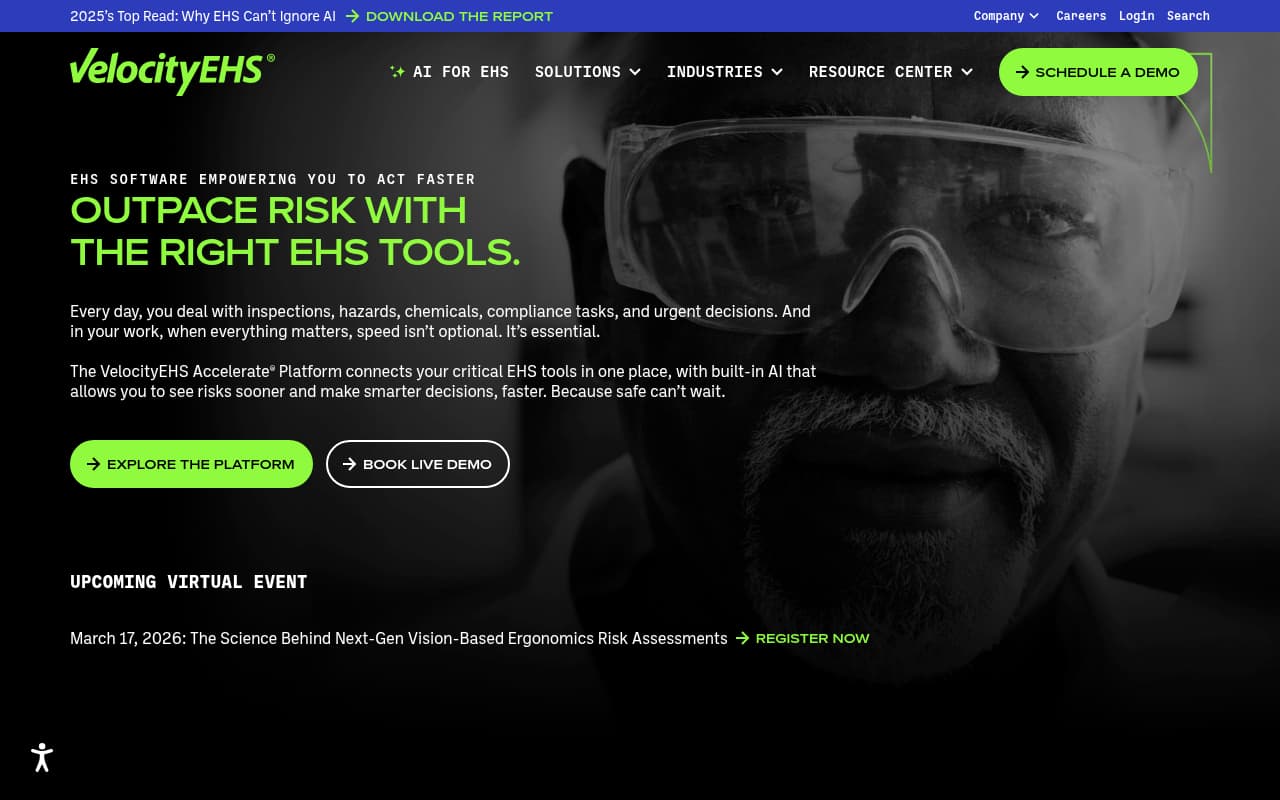
VelocityEHS

Modular EHS platform with site comparison analytics and configurable safety workflows

VelocityEHS safety management software interface

Best For

Mid-to-large operations wanting modular EHS with cross-site performance comparison and benchmarking analytics

Pricing

Quote-based; typically $20,000-$80,000+/year depending on modules and company size

VelocityEHS positions itself between mid-market tools and full enterprise EHS platforms, and the modular approach is its strongest differentiator for multi-site operations. Instead of paying for a 15-module enterprise suite when you only need safety audits and incident management, you can license just the modules relevant to your operation and add more as your program matures. For a multi-site oilfield contractor, that might mean starting with the safety module (audits, inspections, corrective actions) and the incident module (reporting, investigation, OSHA logs), then adding environmental or chemical management later if needed.

The cross-site comparison analytics are genuinely useful and available without enterprise-tier pricing. Safety directors can view all locations on a single dashboard, compare key metrics side-by-side, identify trending issues across the operation, and drill into location-specific data. For a contractor operating 10-20 well sites, this cross-site visibility is the difference between knowing your safety program status and guessing at it.

The limitations for oilfield contractors are practical ones. The mobile app works but feels like a desktop interface shrunk to a phone screen rather than a field-first design. Offline capability is limited, which creates gaps at remote well sites. And the templates are generic EHS — you will need to build or customize templates for oilfield-specific workflows. At $20,000-$80,000+/year, VelocityEHS is more affordable than Cority but still represents a significant investment for a mid-size contractor, especially when the platform requires customization to fit oil-and-gas operations.

Key Features

Modular EHS suite — purchase only the modules you need (safety, industrial hygiene, chemical management, environmental)
Cross-site performance dashboards with location comparison and trend analysis
Incident management with root cause analysis and OSHA recordkeeping
Audit and inspection management with customizable templates
Risk analysis tools with bowtie methodology and risk matrices
Mobile app for field inspections and incident reporting

Pros

  • Modular pricing lets you start with safety-focused modules and add environmental or industrial hygiene later — more cost-effective than all-in-one enterprise platforms if you only need 2-3 modules
  • Cross-site comparison dashboards are included in the core platform, not gated behind enterprise tiers — safety directors can compare audit completion, incident rates, and corrective action aging across all locations
  • Risk analysis tools (bowtie methodology, risk matrices) are more sophisticated than most mid-market competitors and add genuine value for operations with complex hazard profiles

Cons

  • Quote-based pricing still results in $20,000-$80,000+/year for most multi-site deployments — modular discounts help but costs are still enterprise-level compared to purpose-built contractor tools
  • Mobile app is functional but not field-first — the platform was designed as a desktop EHS system with mobile added later, and the difference in UX shows during field inspections
  • Offline functionality is minimal — the mobile app requires connectivity for most operations, which is a problem for remote well sites without reliable cell coverage
  • Not oilfield-specific — generic EHS templates need customization for oil-and-gas workflows like JSAs with H2S considerations, hot work permits, and rig-specific inspection protocols

Verdict: A reasonable mid-point between enterprise EHS and contractor-focused tools. Modular pricing and cross-site analytics are strong, but limited offline capability and generic templates reduce its fit for dispersed oilfield operations.

5

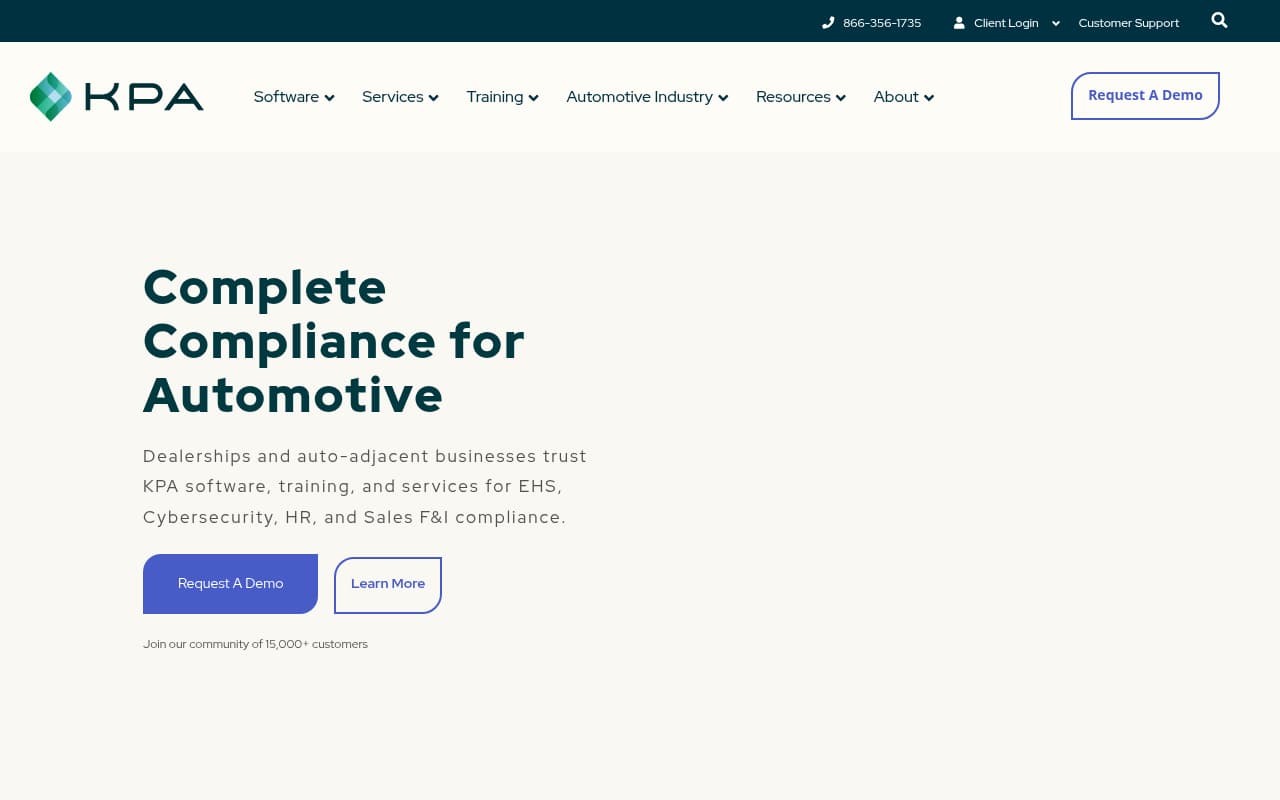
KPA EHS

EHS and workforce compliance platform with strong DOT/fleet management integration

KPA EHS safety management software interface

Best For

Fleet-heavy oilfield operations that need DOT compliance, driver qualification management, and EHS in one platform

Pricing

Quote-based; pricing varies by module combination and company size

KPA occupies a distinctive niche for oilfield contractors because it combines EHS management with DOT and workforce compliance. For contractors who operate fleets of CDL-required vehicles — vacuum trucks, hot shot trucks, winch trucks, frac equipment haulers — managing driver qualification files, drug testing programs, hours of service compliance, and safety inspections in a single platform eliminates the need to maintain separate DOT and EHS systems.

The multi-location management works at a basic level. Each site can have its own inspection schedules, assigned templates, and incident history, with consolidated reporting rolling up to the organizational level. Training management tracks which workers hold current certifications (H2S Alive, PEC SafeLandUSA, first aid/CPR, fall protection) and which certifications are expiring — a real operational need for multi-site contractors who move crews between locations and must verify qualifications at each site.

The trade-off is breadth versus depth. KPA covers EHS, DOT, workforce compliance, and training management, but none of these modules are as deep as a dedicated tool in each category. The safety audit module is functional but lacks the template sophistication and field-first mobile UX of tools built exclusively for safety inspections. The analytics provide multi-site rollup reporting but not the cross-site benchmarking and statistical comparison that safety directors want for performance management. For fleet-heavy oilfield contractors who value the DOT integration, KPA's breadth is an advantage. For contractors whose primary need is safety audit management across multiple sites, a more focused tool will deliver better functionality per dollar.

Key Features

Combined EHS and workforce compliance in one platform
DOT compliance management including driver qualification files, drug testing tracking, and hours of service
Safety audit and inspection management with configurable templates
Incident management with OSHA recordkeeping and reporting
Training management with assignment tracking and completion verification
Multi-location management with consolidated reporting

Pros

  • Unique combination of EHS and DOT/fleet compliance — oilfield contractors who operate CDL-required vehicles (vacuum trucks, hot shot trucks, frac equipment haulers) can manage safety and DOT in one system instead of two
  • Training management module tracks certifications, assigns required training by role and location, and sends renewal reminders — valuable for multi-site operations where crew qualifications must be verified at each location
  • Consulting services included with many plans — KPA provides EHS and compliance advisory support, which smaller contractors without dedicated safety departments find valuable

Cons

  • Quote-based pricing with bundled consulting makes cost comparison difficult — total cost of ownership is not transparent until you engage the sales process
  • Platform is broader than deep — EHS modules cover the basics (audits, incidents, training) but lack the configurability and analytical depth of dedicated EHS platforms or the field-first UX of mobile-native tools
  • Offline capability is limited — field inspections and incident reporting require connectivity, which constrains utility at remote well sites
  • Cross-site dashboards exist but are basic compared to dedicated multi-site analytics — location comparison is available but without the trending, benchmarking, and drill-down depth that safety directors managing 15+ sites need

Verdict: A practical choice for fleet-heavy oilfield contractors who need DOT compliance and EHS in one system. If your primary challenge is safety audit management across multiple sites rather than fleet compliance, more focused tools will serve you better.

6

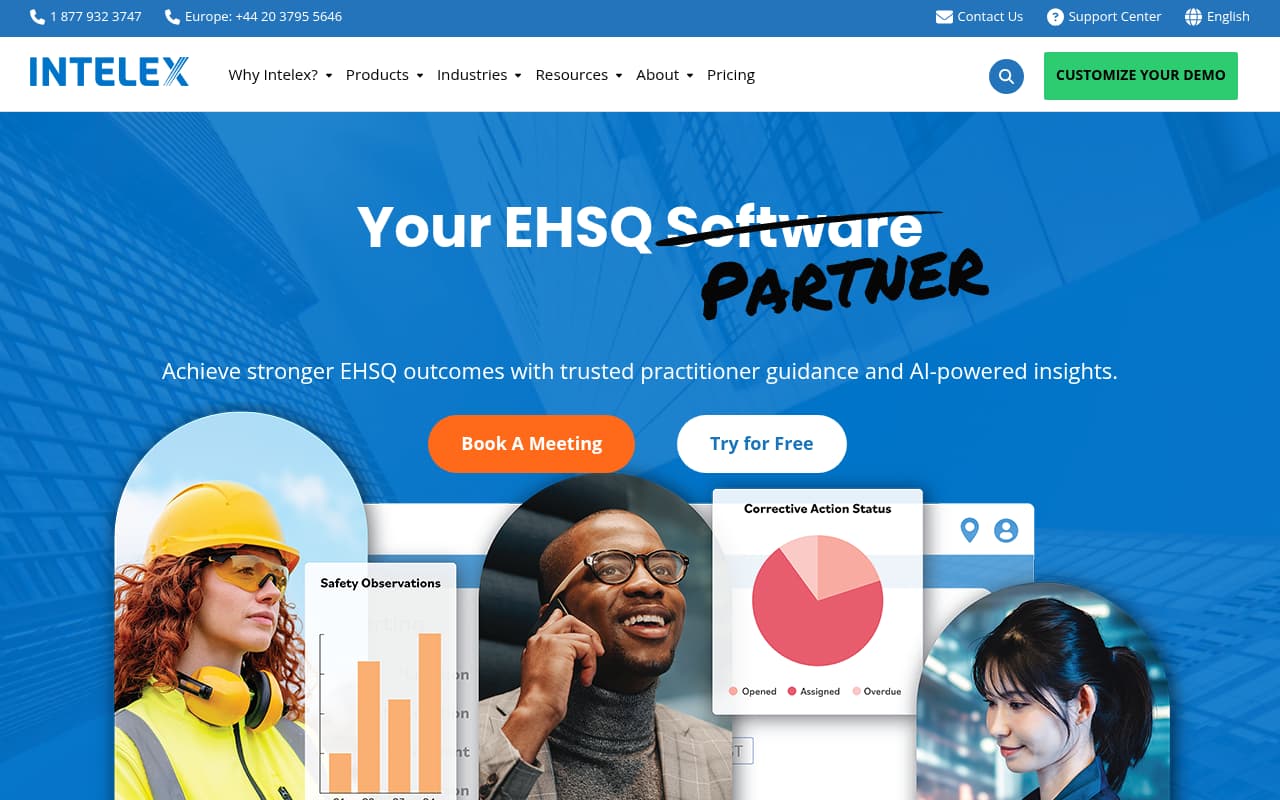
Intelex

Enterprise EHSQ platform with global multi-site deployment capability and extensive compliance libraries

Intelex safety management software interface

Best For

Enterprise operators wanting full-suite EHSQ with global rollout capability across large multi-site portfolios

Pricing

Quote-based (enterprise); typically $60,000-$200,000+/year for multi-site deployments

Intelex is the most comprehensive EHSQ platform on this list, and for the right organization, that comprehensiveness is justified. Enterprise oil-and-gas operators with 100+ locations across multiple jurisdictions, regulatory obligations spanning environment, health, safety, and quality, and dedicated EHS departments to administer the platform — these organizations can leverage Intelex's full capability set and justify the six-figure annual investment.

The global regulatory content library is Intelex's strongest multi-site differentiator. Operators with sites in Texas, North Dakota, Alberta, and offshore jurisdictions get compliance requirements, reporting templates, and regulatory update tracking specific to each jurisdiction. This eliminates the need to manually track regulatory differences across locations — the platform knows which OSHA standards apply to your Texas sites, which Alberta OHS requirements apply to your Canadian operations, and which BSEE regulations apply to your offshore platforms.

For mid-size oilfield contractors — the 50-to-200-person companies operating 5-30 well sites in a single basin — Intelex is dramatically over-scoped and over-priced. The global regulatory library provides no value if all your sites are in the Permian Basin. The quality management and environmental modules go unused if your primary need is safety audits and incident reporting. And the 6-12 month implementation timeline means you are half a year from value while paying enterprise rates. The platform is excellent for what it does; the question is whether your operation is large and complex enough to need what it does.

Key Features

Full EHSQ suite: environment, health, safety, and quality management in one platform
Global regulatory content library with jurisdiction-specific compliance requirements
Multi-site hierarchy with configurable organizational structures and rollup reporting
Incident management with investigation workflows, root cause analysis, and trend prediction
Audit management with scheduling, execution, finding tracking, and closure verification
Extensive integration capabilities with ERP, HRIS, and business intelligence platforms

Pros

  • Most comprehensive EHSQ platform on this list — environment, health, safety, and quality modules are all deeply built, which matters for operators with regulatory obligations across all four domains
  • Global regulatory content library covers OSHA, EPA, Canadian OHS, European directives, and dozens of other jurisdictions — operators with sites in multiple countries or states get jurisdiction-specific compliance content without custom configuration
  • Multi-site hierarchy supports the most complex organizational structures — parent companies, joint ventures, subsidiaries, facilities, and individual assets can all be modeled with appropriate data isolation and rollup

Cons

  • Enterprise pricing starts at $60,000+/year and frequently exceeds $200,000/year for full multi-site deployments — out of reach for mid-size oilfield contractors and poor ROI for companies with fewer than 50 locations
  • Implementation timelines of 6-12 months are typical, with dedicated project managers, system integrators, and ongoing administrator requirements that add significant hidden costs beyond the license fee
  • Mobile and offline capabilities are secondary to the desktop platform — the mobile app handles basic inspections and incident reporting but lacks the field-first design and offline depth that oilfield operations require
  • Platform complexity means most organizations use only 20-30% of available functionality — you pay for global EHSQ capability even if you operate 15 well sites in West Texas and need safety audits, incidents, and JSAs

Verdict: The enterprise EHSQ platform for global operators with 100+ locations and multi-jurisdictional compliance needs. For mid-size oilfield contractors, Intelex is over-engineered, over-priced, and over-scoped — a $200,000 answer to a $7,200 question.

Side-by-side feature comparison

Side-by-side feature comparison of the safety management tools reviewed in this article
SoftwareBest ForStarting PriceUnlimited SitesCross-Site DashboardsOffline ModeO&G TemplatesPer-User Pricing
BasinCheckMulti-site O&G contractors$149/mo flatYes (all plans)Yes (included)Full (audits, incidents, JSAs)Yes (pre-built)No (flat pricing)
SafetyCulture (iAuditor)Template standardization$24/user/moPremium/EnterprisePre-downloaded forms onlyCommunity templatesYes ($24/user/mo)
CorityEnterprise E&P operators~$50,000/yrYes (enterprise)Yes (advanced)LimitedConfigurableYes (bundled)
VelocityEHSModular mid-market EHS~$20,000/yrYes (included)LimitedGeneric EHSYes (per module)
KPA EHSFleet + DOT complianceQuote-basedBasicLimitedSomeBundled
IntelexGlobal enterprise EHSQ~$60,000/yrYes (enterprise)Yes (advanced)LimitedConfigurableYes (bundled)

How We Evaluated These Tools

We evaluated 15+ EHS and safety management platforms for their suitability in multi-site oilfield operations. Our assessment focused on the specific challenges that distributed oilfield contractors face — challenges that single-site tools and generic enterprise platforms often fail to address.

  • Cross-site visibility — Can a safety director see all locations on one dashboard? Can they compare audit completion, incident rates, and corrective action status across sites without exporting data to spreadsheets?
  • Pricing model scalability — How does cost change when you add a 16th well site, hire 10 more field workers, or expand into a new basin? Per-user and per-site pricing models penalize growth; flat pricing does not.
  • Offline capability — Can field crews conduct safety audits, report incidents, and complete JSAs at remote well sites without cell coverage? We tested each tool in airplane mode to verify offline claims.
  • Oil-and-gas specificity — Does the platform include pre-built templates for JSAs, hot work permits, confined space entry, H2S protocols, and rig inspections? Or does it require custom configuration from scratch?
  • Multi-site deployment complexity — How long does it take to get all sites on the platform? Does deployment require professional services, IT support, and months of configuration — or can you be operational across 10 sites in a week?
  • Crew mobility support — Oilfield crews rotate between sites. Does the platform handle workers who need access to multiple location templates, or does it assume static site assignments?

We weighted these criteria for the operational reality of mid-size oilfield contractors: companies with 20-300 personnel operating 5-30+ sites, limited IT staff, and safety teams that are in the field more than they are at a desk. Enterprise features that require dedicated administrators or six-figure budgets were noted but not rewarded.

Frequently Asked Questions

What is the best safety software for managing multiple oilfield locations?

For mid-size oilfield contractors (5-30 sites), BasinCheck offers the best combination of cross-site dashboards, flat pricing, offline capability, and oil-and-gas-specific templates. For enterprise operators with 50+ locations and dedicated EHS departments, Cority and VelocityEHS provide deeper analytics and broader EHS module coverage — at significantly higher cost and implementation complexity.

How does per-user pricing affect multi-site oilfield operations?

Per-user pricing creates budget unpredictability for oilfield contractors because headcount fluctuates with the rig count. A contractor at $24/user/month paying for 50 users spends $14,400/year. If they ramp to 80 users during a busy quarter, that jumps to $23,040/year — a 60% increase with no additional functionality. Flat-priced alternatives like BasinCheck charge the same monthly rate regardless of user count, which makes budgeting predictable as operations scale.

Do I need enterprise EHS software for multi-site oilfield safety?

Not necessarily. Enterprise EHS platforms (Cority, Intelex, VelocityEHS) are designed for organizations with dedicated EHS departments, IT administrators, and budgets exceeding $50,000/year for safety software. Mid-size oilfield contractors with 5-30 sites typically need safety audits, incident management, JSAs, and cross-site reporting — not environmental compliance, industrial hygiene, or quality management modules. A purpose-built oilfield safety tool delivers better field usability at a fraction of enterprise cost.

How important is offline capability for multi-site oilfield safety software?

Offline capability is critical for any oilfield operation with well sites in remote basins, pipeline corridors, or areas with unreliable cell coverage. If your safety software requires internet connectivity to create audits, report incidents, or complete JSAs, crews at those sites fall back to paper — which defeats the purpose of digitizing your safety program. Look for tools that support full offline creation (not just viewing downloaded forms) and reliable sync when connectivity returns.

Can I standardize safety audit templates across all my oilfield sites?

Yes. All six platforms reviewed in this article support deploying standardized templates across multiple locations. The differences are in how this is managed: SafetyCulture and BasinCheck let you update a master template and push it to all sites immediately. Enterprise platforms (Cority, VelocityEHS, Intelex) offer more granular control with location-specific template variations, approval workflows, and version management — useful for operations with different regulatory requirements at different sites, but adds administrative overhead.

Final Verdict

Multi-site oilfield safety management comes down to three questions: can you see all your sites in one place, does your software work where your crews work, and does your pricing model punish you for growing? Most safety software fails on at least one of these. Enterprise platforms deliver cross-site visibility but at enterprise prices with desktop-first designs that struggle in the field. Mobile inspection tools work well at individual sites but lack the cross-location analytics and oilfield-specific workflows that multi-site operations demand.

BasinCheck is the strongest option for mid-size oilfield contractors managing 5-30+ sites. Flat pricing eliminates the per-user and per-site cost escalation that makes other tools increasingly expensive as operations grow. Full offline capability means remote well sites get the same functionality as office-connected locations. And oil-and-gas templates are pre-built, not custom-configured at consulting rates. SafetyCulture is a viable alternative if your primary need is template standardization and you can absorb the per-user pricing. VelocityEHS offers a modular middle ground for operations approaching enterprise scale. And Cority or Intelex are appropriate for large E&P operators with 50+ locations, dedicated EHS departments, and budgets to match.

Start by mapping your actual requirements: how many sites, how many users, which locations lack connectivity, and which safety workflows (audits, incidents, JSAs, environmental) you need to manage. Then get pricing from two or three vendors and calculate total cost of ownership for your specific operation — including implementation, per-user fees, and the cost of modules you will never use. The right tool is the one that covers your real requirements at a price you can sustain as your operation grows.

Related Resources

Compare 6 Best Safety Software for Multi-Site Oilfield Operations

6 best multi-site oilfield safety tools compared. See cross-site dashboards, offline support, and pricing.